
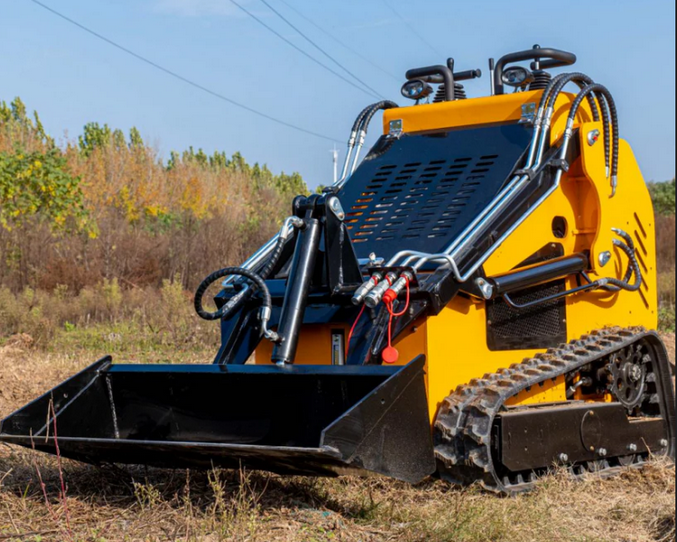
If you need serious power in a compact footprint, a mini skid steer loader can be one of the most practical machines you add to your fleet. These stand-on units are built for jobs where larger equipment feels oversized, difficult to transport, or hard to maneuver. On the MMS collection page, buyers can compare wheel and track models, review attachment-ready options, and see a stated working load capacity range of 500 to 1,600 pounds. The page also highlights a universal quick-connect plate, manufacturer-direct supply, and support terms that include a 1-year warranty and lifetime technical support. For contractors, landscapers, farm operators, and property owners, that combination makes this type of equipment appealing for daily work that demands flexibility without the cost and bulk of larger loaders. For more details, visit https://www.mmsce.com/collections/mini-skid-steer-loader for complete information.
Why These Compact Loaders Are in High Demand
The biggest reason these machines are growing in popularity is simple: they handle real work in places where larger equipment becomes inefficient. A compact frame helps crews move through gates, narrow paths, backyard projects, barn aisles, and tight commercial sites. Bobcat describes mini track loaders as capable of material handling, grading, and digging where larger machines cannot fit, while Vermeer emphasizes that compatible attachments can turn one machine into a tool carrier for many kinds of jobs. That same idea appears on the MMS collection page, which presents multiple stand-on models along with attachment options and a quick-connect system for faster tool changes. For more information, check out https://www.mmsce.com/collections/mini-excavator.
Here is why buyers often choose this category:
- Easy access to narrow or restricted work areas
- Faster cleanup and material movement on smaller sites
- Less trailer and storage burden than full-size equipment
- Better attachment flexibility for mixed job types
- Lower entry cost for startups and growing small businesses
In practical terms, one compact loader can support landscaping, light construction, renovation cleanup, trenching preparation, farm chores, and seasonal property maintenance. That kind of flexibility matters when every machine in your operation has to earn its keep.
Common Jobs These Machines Handle Well
A compact loader earns value when it reduces manual labor and speeds up repetitive tasks. Instead of thinking of it as only a digging or loading machine, think of it as a mobile power platform.
Typical applications include:
- Moving dirt, sand, gravel, mulch, or debris
- Loading trailers or small trucks
- Clearing brush, waste, or light demolition material
- Leveling and site preparation
- Carrying sod, feed, logs, fencing supplies, or pallets
- Trenching or ground-opening work with the right attachment
- Snow removal and seasonal cleanup
- Routine farm and acreage maintenance
This broad usefulness is one reason loaders remain common across construction, agriculture, waste handling, and demolition settings. Cat Rentals notes that loaders are used for scooping, lifting, carrying, grading, loading, unloading, and clearing across multiple industries, while attachment systems expand those uses even further.
For smaller contractors, that means one operator can complete multiple tasks without switching to a different base machine. For property owners, it means less dependence on manual labor and rental schedules.
How to Choose the Right Mini Skid Steer Loader
The right mini skid steer loader is not always the largest model or the lowest-priced option. It is the one that matches your ground conditions, working style, transport setup, and most common attachments.
1) Decide Between Tracks and Wheels
This is one of the most important buying decisions.
Choose wheels when you want:
- Faster travel on hard ground
- Easier turning on paved or solid surfaces
- Lower maintenance burden
- Lower ownership or rental cost in many cases
Choose tracks when you want:
- Better traction on mud, snow, soft soil, or rough terrain
- More stable travel on uneven ground
- Better flotation because weight is spread over more surface area
- Reduced risk of flats stopping work
Cat Rentals summarizes the difference clearly: wheel loaders tend to do better on paved or firm surfaces and usually move faster, while track loaders are better on soft, uneven, or slippery terrain and generally offer stronger traction.
If your work is mostly residential landscaping, yard access, and compact transport, either setup can work. If your sites are muddy, sloped, or unpredictable, tracks often make more sense. If you mainly work on solid surfaces and care about simple upkeep, wheels may be the smarter investment.
2) Match Capacity to Your Real Work
Many buyers overspend on capacity they rarely use. A better approach is to define your everyday jobs first.
Ask yourself:
- What materials will I move most often?
- How heavy are those loads?
- Will I mainly use a bucket, forks, grapple, or specialty attachment?
- Do I need extra lift capability or just compact mobility?
- Will I transport the machine frequently?
On the MMS collection page, the stated working load range runs from 500 to 1,600 pounds, with listed product filters showing models in several compact operating-weight bands and horsepower options such as 13.5 HP and 23 HP. That range suggests buyers should choose based on task mix, not just maximum output.
For example, a lighter machine may be ideal for home projects, routine landscaping, and backyard access. A stronger unit makes more sense if you expect regular loading, rough grading, or attachment-heavy commercial use.
3) Think About Jobsite Access Before Power
A compact machine only creates value if it can go where your work is. Measure the gates, paths, trailer dimensions, and storage space you deal with most often.
Important questions include:
- Will it fit through side-yard gates?
- Can your trailer safely handle the machine plus attachments?
- Is there enough room for turning and staging materials?
- Are you working on delicate surfaces that need lower ground pressure?
A smaller footprint can outperform a bigger machine when the site is tight. Efficiency is not just about power. It is about how much work you can actually complete without delays, turf damage, or constant repositioning.
4) Prioritize Attachment Compatibility
One of the strongest reasons to buy in this category is attachment versatility. Vermeer states that compatible attachments allow one machine to support many jobsite applications, and the MMS collection description similarly highlights various attachments plus a universal quick-connect mounting plate for convenient switching. Cat Rentals also notes that loader versatility depends heavily on choosing the right work tools for the job.
Before buying, make a shortlist of the tools you actually plan to use, such as:
- Standard bucket
- Pallet forks
- Grapple
- Auger
- Trencher
- Brush cutter
- Dozer blade
- Snow or debris tools
The more often you change tools, the more valuable a quick-connect system becomes. It saves time, reduces operator frustration, and helps one machine do the work of several specialized units.
Features That Matter More Than Buyers Expect
Many people focus first on engine size or price, but long-term satisfaction usually comes from details that affect daily use.
Operator Comfort and Visibility
A stand-on design can be excellent for visibility and repeated on-and-off work. It can also improve awareness when working in tighter spaces. Pay attention to platform layout, control reach, step access, and sight lines to the attachment area.
Build Quality
Look for strong welds, straightforward hose routing, secure fittings, and protective design around components that take abuse. A machine that looks compact should still feel sturdy under load.
Service Access
Routine service is unavoidable. Easy access to filters, fluids, grease points, and wear parts saves time over the life of the machine.
Parts and Technical Support
Support is not a minor detail. The MMS page banner highlights a 1-year warranty and lifetime technical support, which is important because even a good machine can become expensive if service guidance and parts access are weak.
Transport Simplicity
For small crews and owner-operators, trailer compatibility matters. If moving the machine is difficult, it may sit unused when it could be earning money.
Buying Tips for Contractors, Landscapers, and Property Owners
The smartest buyers do not just compare price tags. They compare work outcomes.
Use this checklist before purchasing:
- Define your top three recurring jobs
- Pick tracks or wheels based on terrain, not appearance
- Confirm working capacity for your usual materials
- Check attachment compatibility first
- Review support, warranty, and parts availability
- Think about transport and storage requirements
- Estimate operating cost, not just purchase cost
- Consider how quickly the machine can replace manual labor
For a landscaping company, the ideal machine may be the one that can move mulch, carry pavers, trench lightly, and fit into tight yards. For a farm owner, the best unit may be the one that handles feed, cleanup, light grading, and fencing materials. For a small contractor, the right choice is often the model that balances compact access with enough strength for loading and site prep.
In other words, the best purchase is rarely the most powerful machine on the page. It is the one that fits your routine work with the least friction.
Maintenance and Safety Essentials
Good buying decisions also include a plan for upkeep and safe operation.
Basic maintenance habits
- Inspect tires or tracks before each job
- Keep hydraulic connections clean
- Grease daily-use points on schedule
- Check attachment locking systems regularly
- Clean debris from cooling and engine areas
- Replace worn hoses and fittings early
Safe operating habits
- Never exceed rated limits
- Keep loads low while traveling
- Match the attachment to the task
- Slow down on slopes and uneven terrain
- Train every operator on startup, shutdown, and tool changes
- Inspect the work area for hidden hazards before operating
The MMS collection page notes that its machines include operational safety measures, which reinforces a broader point: compact equipment may be smaller than full-size machines, but it still demands disciplined operation and regular inspection.
FAQ
1) Is a mini skid steer loader a good choice for residential landscaping?
Yes. It is often a strong choice for landscaping because it can access narrower spaces, reduce manual labor, and support multiple tools such as buckets, forks, and ground-engaging attachments. It is especially useful when you handle a mix of moving materials, grading, and cleanup on smaller sites.
2) Should I buy a wheel model or a track model?
Choose based on terrain. Wheels are generally better on hard, dry surfaces and are often easier to maintain. Tracks are usually better for soft ground, mud, snow, or rough conditions where traction matters more.
3) Why do attachments matter so much?
Attachments turn one base machine into a multi-purpose tool carrier. That means better utilization, fewer extra machines, and more ways to earn value from a single purchase. The quick-connect approach shown on the referenced collection page makes tool changes easier.
4) Is horsepower the most important spec?
Not by itself. Capacity, footprint, terrain fit, attachment plan, and service support often matter more in daily use. A machine with the right balance will usually outperform a larger one that is awkward for your actual sites.
5) What should I check before buying?
Start with job type, load size, access width, trailer capacity, terrain, attachment compatibility, and support coverage. Those factors will affect real-world performance more than a sales discount alone.
Conclusion
A mini skid steer loader is a practical investment when your work demands compact access, steady lifting capability, and attachment-driven versatility. The MMS collection page shows why this category appeals to so many buyers: multiple wheel and track options, a usable capacity range, quick-connect compatibility, and direct-support positioning from the seller. The smartest purchase decision comes down to matching the machine to your most common jobs, terrain conditions, and attachment needs. When you buy with that mindset, you are not just getting a compact machine. You are choosing a flexible work platform that can save labor, improve efficiency, and support growth across landscaping, property maintenance, farming, and light construction.